

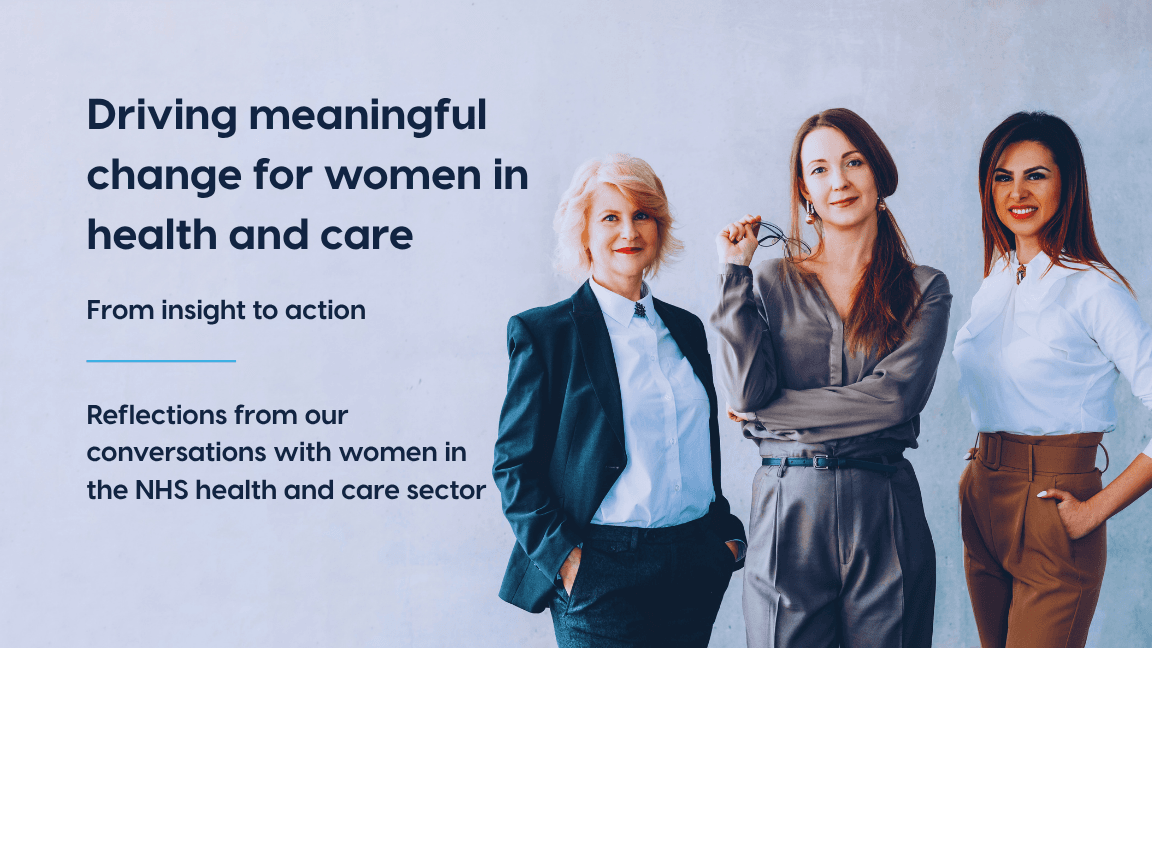
Driving Meaningful Change in Health & Care
Driving Meaningful Change in Health & Care
Driving meaningful change for women in health and care: from insight to action
Following our recent collaboration with the Health and Care Women Leaders Network, we spoke with St. Vincent’s Luminaries Mandy Rayner and Ciara Moore about the changes healthcare leadership can make to better support women in their careers.
Their reflections were strikingly aligned — and importantly, actionable.
**1. Flexibility is no longer a benefit — it’s a system enabler
**
A consistent theme was clear: flexible working is one of the most powerful levers for improving career progression for women.
This goes far beyond hybrid policies or part-time options. It’s about recognising the reality of modern caregiving, not just for children, but increasingly for ageing parents and extended family.
- Women still disproportionately carry caring responsibilities
- Many step back from leadership opportunities because roles feel incompatible with life outside work
- Career progression stalls not due to capability, but structural inflexibility
Ciara Moore highlighted that many women could hesitate to pursue leadership opportunities when flexible working policies are unclear or inconsistent, particularly those balancing professional responsibilities alongside caregiving.
As Mandy Rayner reflected:
“There is hardly any job share roles now — have we lost this capacity?”
This is something healthcare leaders can, and must, directly influence.
Designing roles differently through job shares, flexible leadership models, and protected development time isn’t a ‘nice to have’.
It’s how we retain talent, experience and leadership capability across the system.
**2. Sponsorship, not just mentorship, must become the norm
**
Another clear theme was the importance of structured mentorship and, critically, sponsorship.
This means actively connecting women with senior leaders who can:
- advocate for them
- create visibility
- open doors — and follow through
Because advice alone isn’t enough.
Women don’t just need guidance — they need:
- access to decision-making spaces
- advocates in the room
- leaders who actively champion their progression
Creating those conditions is not accidental — it requires intent.
Ciara also reflected on the importance of dedicated mentorship and sponsorship programmes that connect women with senior leaders who can actively support their progression and provide meaningful guidance.
Without this, progression slows — and valuable talent risks being overlooked.
**3. Representation exists — but influence still needs to shift
**
The NHS workforce is predominantly female, yet senior leadership remains disproportionately male.
But this isn’t just about numbers.
It’s about:
- who speaks
- who is heard
- who is assumed to be the expert
Mandy Rayner also reflected on the subtle but persistent cultural barriers women can still face in senior leadership environments.
Working within a traditionally male-dominated IT leadership space, she described the challenge of needing to work harder to be heard, included and recognised as an expert, highlighting that progression is not only about opportunity, but also about culture, visibility and belonging.
This isn’t simply a pipeline issue.
It’s about how inclusion shows up day to day, in meetings, decisions and leadership behaviours.
**4. We need to rethink career trajectories — not just accelerate them
**
A powerful theme across the discussion was the impact of life stages on careers.
- Having children can significantly delay progression
- Women working part-time can lose access to development opportunities
- Experienced women later in their careers are often overlooked, despite being invaluable mentors
This gives healthcare leaders a clear challenge — and opportunity:
➡️ Design careers that flex over time, rather than expecting linear progression
That means:
- maintaining access to training during part-time work
- creating re-entry and upskilling pathways
- recognising and valuing experience beyond traditional promotion routes
Not everyone is looking for the next role — but everyone wants to feel valued.
And at a time when workforce pressures remain significant across health and care, retaining experienced female leaders and creating environments where women can progress sustainably has never mattered more.
So what needs to change — now?
The insights shared here reflect real, lived experience across healthcare leadership.
The actions are not complex — but they do require intent:
- Design roles with real flexibility
- Actively sponsor and advocate for women
- Create environments where women are heard and included
- Rethink what progression looks like across a full career
These conversations have also prompted reflection internally at St. Vincent’s.
We’ll be continuing these conversations across our own team to identify practical changes that better support progression, flexibility and inclusion, recognising that supporting women to progress requires action, not just discussion.
The opportunity now is for all of us to move from awareness to action.
If this resonates, we’re always open to a conversation about how to turn these insights into practical, meaningful change across your organisation.
#DigitalHealth #HealthcareLeadership #WomenInHealthcare #NHS #HealthTech #DigitalTransformation
Let’s talk about your needs
We’re ready to help share the responsibility on your shoulders. All you have to do is get in touch.